
The Best Accredited Online Christian School in Texas for 2026
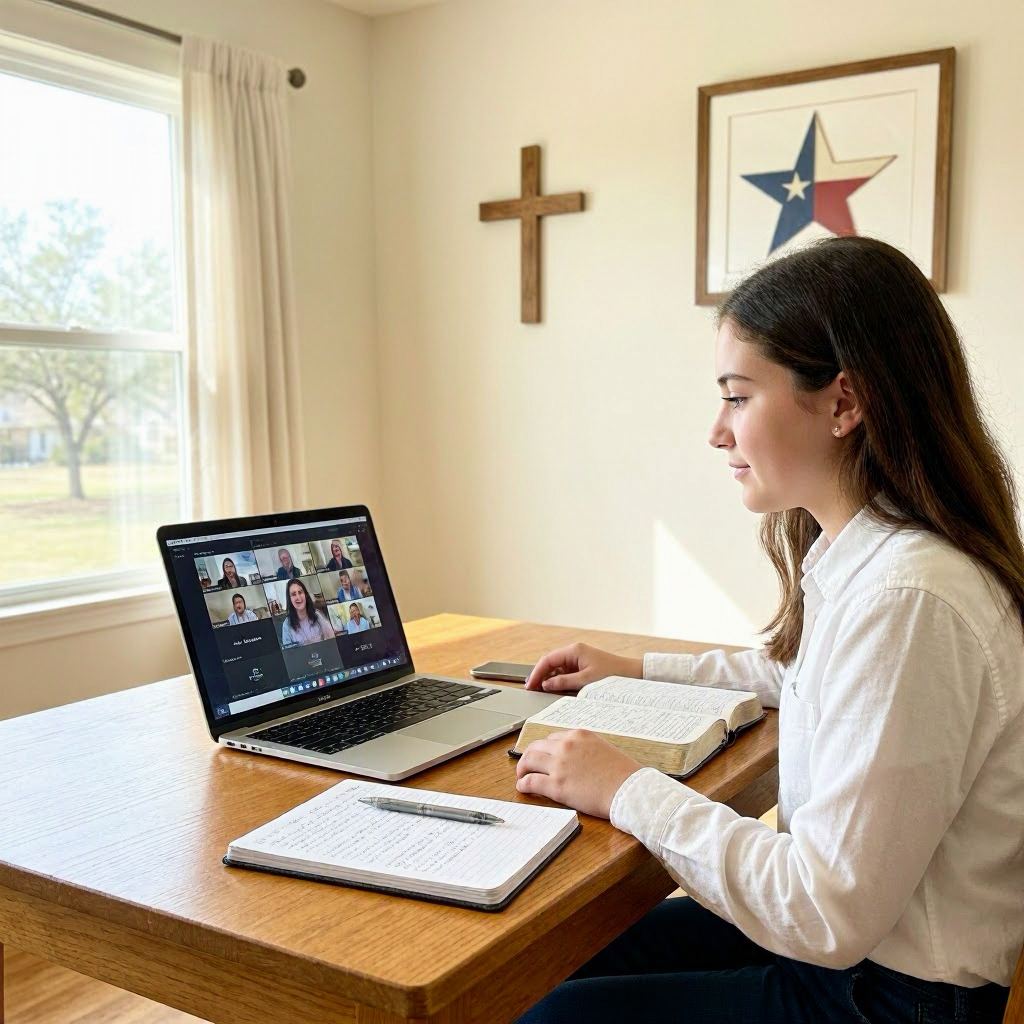
Texas families searching for an accredited online Christian school have more options than ever, and that is both a blessing and a challenge. With hundreds of programs competing for your attention, it can be hard to separate the schools that are genuinely excellent from those that simply look good on a landing page. Accreditation matters. Faith integration matters. Teacher quality matters. And the school your child attends for the next 180 days matters more than most decisions you will make this year. This guide walks you through exactly what to look for, what questions to ask, and why Pathway Christian Prep Academy has become one of Texas's most trusted accredited online Christian schools.
What Does "Accredited" Actually Mean?
Accreditation is one of the most misunderstood terms in private and online education. It does not mean a school is registered with the state. It does not mean a school has a professional website or a strong social media presence. Accreditation means a rigorous, independent, nationally recognized organization has evaluated the school, its curriculum, its teachers, its student outcomes, and its institutional practices and officially certified that it meets a real academic benchmark. For your family, accreditation has practical consequences:
- College recognition: Colleges and universities across the country accept diplomas from accredited schools without question. Unaccredited diplomas may raise flags in the admissions process.
- Credit transfer: If your child ever re-enrolls in a traditional school, accredited credits transfer. Unaccredited credits often do not.
- Third-party verification: Accreditation is your proof that the education your child is receiving meets a standard beyond the school's own claims.
Pathway Christian Prep Academy is accredited by **Cognia** (formerly AdvancED), one of the most respected and widely recognized accrediting bodies in the United States. Cognia accreditation is accepted by Texas public universities, including UT Austin and Texas A&M, as well as colleges and universities nationwide.
Why Faith Integration Matters And What It Actually Looks Like
Not every school that calls itself Christian integrates faith the same way. There is a significant difference between a school that offers a weekly Bible class and a school where Biblical worldview is woven into every subject: science, history, literature, and math.
Surface-level faith integration looks like this: a devotional at the start of the school day, a required Bible course each semester, and a statement of faith on the website. These are not bad things. But they represent faith as an add-on, not as a foundation.
Deep faith integration—the kind Pathway is built on—looks like this: a history teacher who frames every civilization and every geopolitical event through the lens of God's sovereign plan. A science teacher who grounds every discovery in the truth that the universe was designed by an intentional Creator. A literature teacher who asks students to evaluate every text through a Biblical understanding of human nature, sin, redemption, and purpose.
At Pathway, every course is developed with a Biblical worldview framework as a core design requirement. Every teacher is a believing, practicing Christian who brings their faith into the classroom naturally and consistently. Every student is known not just as a learner, but as a person made in the image of God.
Live Instruction vs. Self-Paced: Why It Matters More Than You Think
When most families first consider online school, they imagine their child watching pre-recorded video lessons and completing worksheets independently. For some families, that model works well. For most K-12 learners, it leads to isolation, falling behind, and eventual disengagement.
Research consistently shows that live instruction—even in an online environment—produces significantly better academic outcomes than self-paced video-based learning. Live instruction means accountability. It means relationships. It means a teacher who notices when a student is struggling and intervenes before they fall two units behind.
Pathway's LivePath program is built on live, scheduled instruction with certified Christian teachers. Students attend class at set times, interact with peers in real time, ask questions, participate in discussions, and build the kind of genuine relationships that make school worth showing up for—all within a faith-centered virtual community. If your child has ever felt invisible in an online program, LivePath was designed specifically to solve that problem.
Texas TEFA: How to Use Education Savings Account Funds at Pathway
One of the most significant financial developments for Texas families in recent years is the Texas Education Freedom Account (TEFA) program. TEFA allows eligible Texas families to redirect a portion of public education funding into a private account and use those funds toward approved private school tuition, including accredited online programs.
Pathway Christian Prep Academy is a TEFA-approved provider, which means Texas families can apply TEFA funds directly toward Pathway tuition. This is a meaningful financial benefit—TEFA funding can cover a significant portion of the cost of a Cognia-accredited, faith-based education.
If you are not sure whether you qualify for TEFA, our admissions team will walk you through the eligibility requirements and application process at no cost. We work with TEFA families every enrollment cycle and know the process inside and out.
What the Pathway Curriculum Actually Covers
Pathway offers a full K-12 curriculum that includes all core subjects—English Language Arts, Mathematics, Science, History, and Bible—as well as electives at the middle and high school levels. The curriculum is developed to meet or exceed Texas academic standards while integrating a Biblical worldview throughout.
At the elementary level, the focus is on building strong foundational skills in reading, writing, and math within a nurturing, faith-centered environment. At the middle school level, students begin developing independent study habits, critical thinking skills, and a deeper understanding of how their faith applies to the world around them. At the high school level, the curriculum is college-preparatory, designed to prepare students for university admission and for a life of purpose-driven leadership.
What the Pathway Curriculum Actually Covers
Pathway offers a full K-12 curriculum that includes all core subjects—English Language Arts, Mathematics, Science, History, and Bible—as well as electives at the middle and high school levels. The curriculum is developed to meet or exceed Texas academic standards while integrating a Biblical worldview throughout.
At the elementary level, the focus is on building strong foundational skills in reading, writing, and math within a nurturing, faith-centered environment. At the middle school level, students begin developing independent study habits, critical thinking skills, and a deeper understanding of how their faith applies to the world around them. At the high school level, the curriculum is college-preparatory, designed to prepare students for university admission and for a life of purpose-driven leadership.
Who Pathway Serves
Pathway Christian Prep Academy was built to serve a wide range of Texas families:
- Homeschool families who want accreditation, structure, and certified teachers without giving up flexibility
- Families leaving public school who are looking for a faith-centered alternative with strong academic credentials
- Student athletes and performing artists who need a flexible schedule that accommodates their training commitments
- Families with special circumstances: frequent relocation, health challenges, or unique learning needs who need a school that works around their lives, not the other way around
- Families who simply want more: more faith, more relationship, more intentionality in their child's education
Questions to Ask Before You Enroll in Any Online Christian School
Before choosing an online Christian school in Texas, ask every school you consider these questions:
1. What accrediting body has certified the school? Look for Cognia, ACSI, or another nationally recognized body.
2. Are teachers certified? Ask about teacher credentials and whether they are practicing Christians.
3. Is instruction live or self-paced? Know what your child is actually getting.
4. How is faith integrated into academics—not just into extracurriculars?
5. What does the transcript look like? Ask to see a sample. It should look professional and be accepted by the colleges your child is considering.
6. Is the school TEFA-approved? If you are a Texas family, this is a financial question you should always ask.
Pathway's admissions team welcomes every one of these questions. We would rather answer them honestly upfront than have a family enroll who is not the right fit.
Take the Next Step
2026/2027 enrollment is open. Pathway serves K-12 students across Texas and beyond.
Schedule a Free Family Info Call- no pressure, just honest answers from our admissions team.
Apply Now- secure your student's spot for Fall 2026.