
Is Virtual School Right for My Child? 7 Questions Every Parent Should Ask
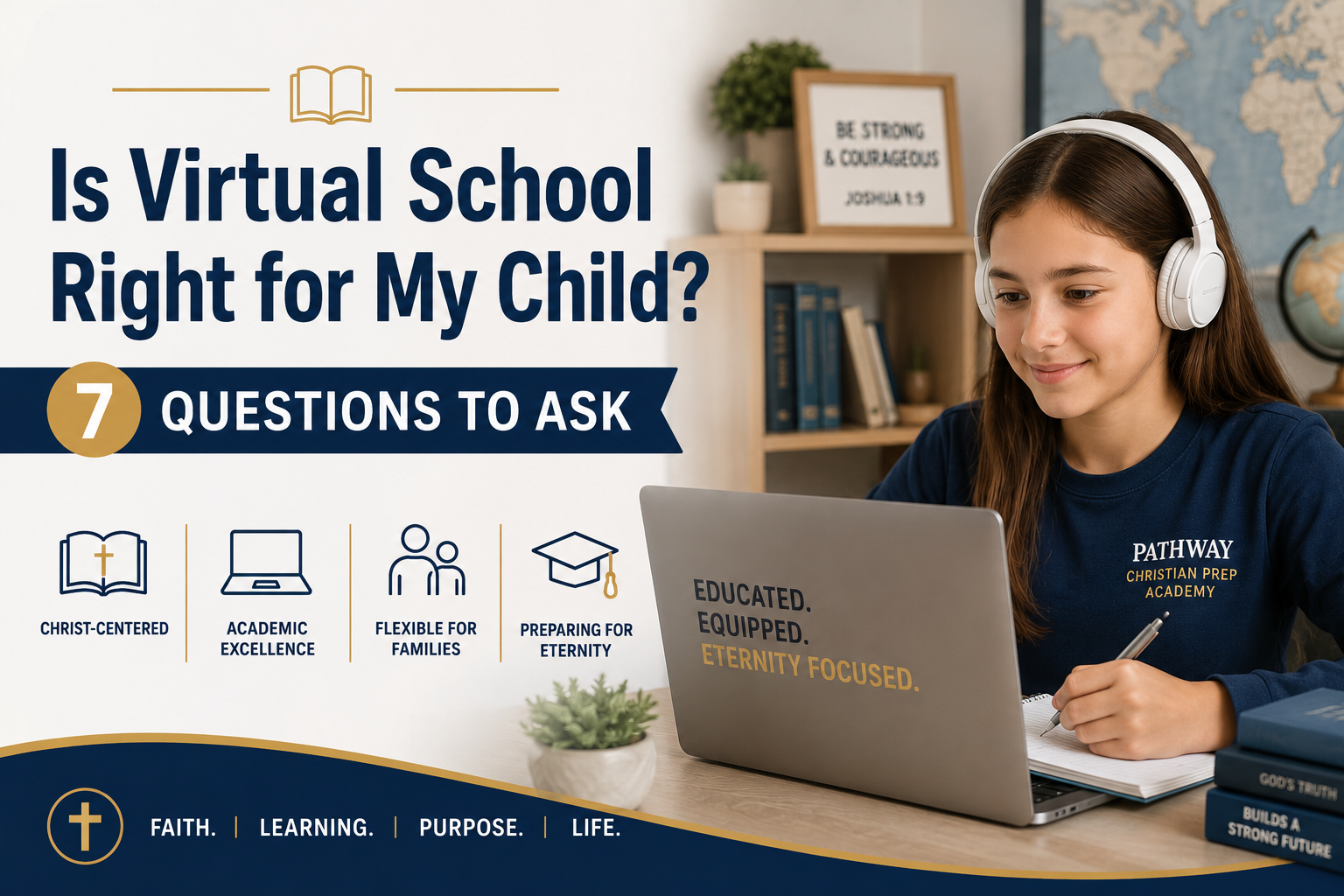
Every year, thousands of Christian families find themselves asking the same question: Is virtual school actually right for us?
Maybe your child is struggling in a traditional classroom. Maybe you want more control over what your child is learning. Maybe your family's schedule doesn't fit neatly into a 7:45 AM bell. Or maybe you've simply felt that the school your child attends doesn't share the values your family lives by every day.
Whatever brought you here, this question deserves a real answer — not a sales pitch.
Virtual school isn't right for every child. But for the right family, it can be one of the most transformative educational decisions you ever make. Here are seven honest questions that will help you figure out which side of that line your family is on.
1. Does My Child Need Structure, or Do They Thrive with Flexibility?
This is the most important question of all, and there's no wrong answer — only an honest one.
Some children genuinely need the rhythm of a physical classroom: the bell that signals it's time to focus, the teacher standing at the front of the room, the social pressure of peers doing the same work at the same time. If your child struggles to self-regulate without external cues, a fully asynchronous program may not serve them well.
But many children — particularly those who are intrinsically motivated, curious, or simply wired differently — come alive in a flexible environment. They work faster in the morning. They need longer breaks. They'd rather read for two hours and compress three subjects into a focused afternoon session than be paced by a 47-minute class period.
At Pathway Christian Prep Academy, our LivePath program offers live, scheduled instruction with real teachers — so your child still has daily structure, human accountability, and a classroom community. FlexPath offers more independence for students who are self-directed. There's an option for both types of learners.
2. Am I Prepared to Be More Involved in My Child's Education?
Virtual school doesn't mean handing your child a laptop and walking away. Especially for younger students in K–5, a parent or guardian needs to be present, engaged, and willing to be the on-site support.
This doesn't mean you need to be a teacher. Pathway's teachers handle instruction, grading, lesson plans, and communication. But you do need to be present enough to make sure your child is logging in, staying on task, and reaching out when they're stuck.
For families where that's possible — whether because a parent works from home, a grandparent is involved, or your schedule simply allows it — virtual school can be deeply rewarding. If your household realistically can't provide that daily presence for a younger child, it's worth thinking carefully before enrolling.
3. How Does My Child Handle Social Interaction?
One of the most common concerns parents have about virtual school is social development. It's a fair concern, and it deserves a direct answer.
Virtual school looks different socially than traditional school. The daily hallway conversations, the lunch table, the impromptu friendships that form during PE — those aren't part of the virtual experience in the same way.
What replaces them? Live class sessions with real classmates. School-organized events and activities. Co-ops, church youth groups, sports leagues, and community programs that your family chooses intentionally. Many virtual school families find that their children are actually more socially intentional — because their social lives aren't handed to them by proximity, they're built on purpose.
If your child is shy, introverted, or has struggled with social anxiety in a traditional school, virtual school can actually be a relief. If your child is highly social and feeds off of in-person energy, you'll want to make sure you're building those outlets intentionally outside of school hours.
4. Is Faith Integration Important to Us — and Is the School Actually Doing It?
For Christian families, this question is non-negotiable. But it's worth being specific about what you're looking for, because "faith-based" means very different things at different schools.
Some schools describe themselves as faith-based because they offer an optional Bible elective. Others integrate Scripture, prayer, and a biblical worldview into every subject, every day — not as an add-on, but as the lens through which all learning happens.
At Pathway Christian Prep Academy, faith isn't a department. It's the foundation. Our curriculum connects academic content to Scripture, our teachers lead in prayer, and the school's identity is built around the belief that education is a calling — for students and teachers alike.
When evaluating any faith-based virtual school, ask: Is faith integrated into the core curriculum, or is it offered as an elective? Do the teachers personally share the school's faith values? Is there a community of believers for your child to grow alongside?
5. How Important Is Accreditation to Our Family?
Not every family needs a fully accredited school. Some families are primarily focused on faith and flexibility and aren't planning for traditional college pathways. That's a legitimate choice.
But if you want your child's transcript to be recognized — by colleges, by other schools if you transfer, by scholarship programs, and by NCAA eligibility standards — accreditation matters enormously.
Pathway Christian Prep Academy is accredited by Cognia, recognized by WASC, and NCAA-eligible. Our diplomas are recognized nationwide. Families who care about keeping doors open for their child's future should put accreditation near the top of their checklist.
6. What Does My Child Actually Think?
This one sounds obvious, but it gets skipped more than you'd expect.
A child who chooses virtual school — who's excited about it, who understands what it means, who had some voice in the decision — is far more likely to succeed than a child who feels like virtual school was decided for them.
If your child has expressed frustration with traditional school, been bullied, struggled with the pace, or simply felt out of place — they may be ready for something different and relieved when you bring it up. If virtual school feels to them like a punishment or a removal from something they love, that's important information too.
Have the conversation. Ask what they're hoping for. Let their input shape the decision.
7. Are We Ready to Treat This Like a Real School — Because It Is?
The families who struggle most with virtual school are the ones who treat it casually — who let attendance slide, skip live sessions, or don't hold their children to the same academic standards they would in a traditional building.
Virtual school done well requires the same commitment as any other school. Set a schedule. Create a workspace. Show up on time for live sessions. Communicate with teachers. Take the work seriously.
The families who do this — who treat Pathway like the real, accredited academic institution it is — consistently see extraordinary results: students who graduate ahead of schedule, children who rediscover a love for learning, and families who look back and say it was one of the best decisions they ever made.
Ready to Take the Next Step?
If these questions left you feeling like virtual school might be the right fit, we'd love to talk. Pathway Christian Prep Academy offers free consultations with our admissions team — no obligation, just a real conversation about whether we're the right school for your family.
[Apply Now] → [Schedule a Call]